


Tom Gjelten
Tom Gjelten reports on religion, faith, and belief for NPR News, a beat that encompasses such areas as the changing religious landscape in America, the formation of personal identity, the role of religion in politics, and conflict arising from religious differences. His reporting draws on his many years covering national and international news from posts in Washington and around the world.
In 1986, Gjelten became one of NPR's pioneer foreign correspondents, posted first in Latin America and then in Central Europe. Over the next decade, he covered social and political strife in Central and South America, the first Gulf War, the wars in the former Yugoslavia, and the transitions to democracy in Eastern Europe and the former Soviet Union.
His reporting from Sarajevo from 1992 to 1994 was the basis for his book Sarajevo Daily: A City and Its Newspaper Under Siege (HarperCollins), praised by the New York Times as "a chilling portrayal of a city's slow murder." He is also the author of Professionalism in War Reporting: A Correspondent's View (Carnegie Corporation) and a contributor to Crimes of War: What the Public Should Know (W. W. Norton).
After returning from his overseas assignments, Gjelten covered U.S. diplomacy and military affairs, first from the State Department and then from the Pentagon. He was reporting live from the Pentagon at the moment it was hit on September 11, 2001, and he was NPR's lead Pentagon reporter during the early war in Afghanistan and the invasion of Iraq. Gjelten has also reported extensively from Cuba in recent years. His 2008 book, Bacardi and the Long Fight for Cuba: The Biography of a Cause (Viking), is a unique history of modern Cuba, told through the life and times of the Bacardi rum family. The New York Times selected it as a "Notable Nonfiction Book," and the Washington Post, Kansas City Star, and San Francisco Chronicle all listed it among their "Best Books of 2008." His latest book, A Nation of Nations: A Great American Immigration Story (Simon & Schuster), published in 2015, recounts the impact on America of the 1965 Immigration Act, which officially opened the country's doors to immigrants of color. He has also contributed to The New York Times, The Wall Street Journal, The Washington Post, The Atlantic, and other outlets.
Since joining NPR in 1982 as labor and education reporter, Gjelten has won numerous awards for his work, including two Overseas Press Club Awards, a George Polk Award, and a Robert F. Kennedy Journalism Award. He is a member of the Council on Foreign Relations. A graduate of the University of Minnesota, he began his professional career as a public school teacher and freelance writer.
-
Henry Kissinger, a hawkish and towering figure in foreign policy circles, has died at the age of 100. (Story aired on All Things Considered on Nov. 29, 2023.)
-
 Kissinger's guiding foreign policy principle was that strategic national interests take priority over more idealistic aims, like the promotion of human rights and democracy.
 -
 America's diversity means it is not defined by a single ancestry or faith tradition. Americans may nevertheless unite behind a "civil religion" that incorporates the nation's founding principles.
 -
After six years on the religion and belief beat — and four decades reporting for NPR — Tom Gjelten is retiring. He discusses how covering religion in America has changed in recent years.
-
 Resettling a single refugee family requires a huge effort, and after four years of neglect under the Trump administration, rebuilding the system will be difficult.
 -
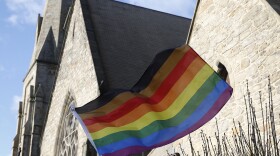 Some religious groups fear the Equality Act could undermine the freedom to exercise traditional faith beliefs. Other denominations say anti-LGBTQ discrimination cannot be tolerated.
 -
Because abortion-derived cell lines were used in its development, some Christian groups are advising against using the Johnson & Johnson COVID-19 vaccine if other vaccines are available.
-
 The work of ministering to the sick and consoling the grieving has been a heavy burden for many faith leaders in the time of COVID-19.
 -
 In addition, most white evangelicals and Republicans say Biden's election was illegitimate and Trump was not behind the attack on the Capitol.
 -
Some of the extremists who assaulted the U.S. Capitol are Christian nationalists. They believe they are on a divine mission to challenge government institutions in the name of God.


